Participant Biographies
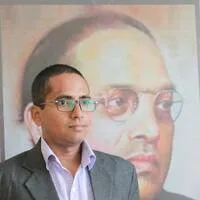
Ayaz Ahmad is Associate Professor at the United World School of Law, Karnavati University, Gandhinagar. He is currently at Columbia University on a Fulbright-Nehru Postdoctoral Research Fellowship. Dr. Ahmad’s Fulbright-Nehru Postdoctoral Research fellowship project focuses on the constitutive functions of minority rights based on religion by deconstructing the judicial discourse around it. He draws from the socio-political developments in America, which led to the judicial annulment of ‘separate but equal doctrine’ in order to secure democratic educational space.
Yonas Ashine Demisse is Assistant Professor of Political Science and International Relations at Addis Ababa University. He is the author of Slaves of State and intellectuals of Development: A Genealogy of Development in Ethiopia. His research interest includes political theory and historical and comparative politics of state-society relations in Africa and from Africa. Currently Yonas is serving as Chairperson of the Department of Political Science and International Relations.
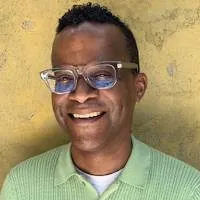
Stephen Best is Professor & Rachael Anderson Stageberg Chair in English at UC-Berkeley, where he is also Director of the Townsend Center for the Humanities. His scholarship encompasses a variety of fields and materials: American and African-American literature and culture, cinema and technology, rhetoric and the law, and critical theory.
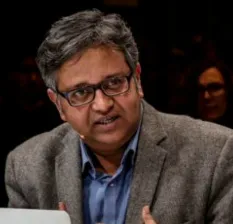
Baidik Bhattacharya is Associate Professor at the Centre for the Study of Developing Societies. He is the author of Postcolonial Writing in the Era of World Literature: Texts, Territories, Globalizations (2018) and Colonialism, World Literature, and the Making of the Modern Culture of Letters (2024). His essays have appeared in Critical Inquiry, New Literary History, Modern Philology, Boundary 2, Interventions, Postcolonial Studies among other places.
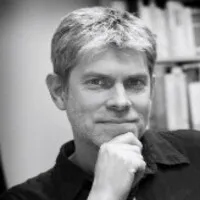
Bruno Bosteels is Jesse and George Siegel Professor in the Humanities in the Department of Latin American and Iberian Cultures with a joint appointment in the Institute for Comparative Literature and Society. He currently serves as the Dean of Humanities in the Faculty of Arts and Sciences. His research covers a wide range of topics in literature, culture, and politics in modern Latin America as well as contemporary philosophy and political theory.
Claudia Breger is the Villard Professor of German and Comparative Literature. Her research focuses on twentieth- and twenty-first century culture, with emphases on film and theater; literary, media, and cultural theory; and the intersections of gender, sexuality and race.

Karida Leigh Brown is an historical and cultural sociologist whose research interests are centered on ontologies of race, racialization, and racism. She is Professor in the Department of Sociology at Emory University. Her work is informed by the questions: In the historical thrust of racial capitalism, how is racial difference invented, rationalized, and systemically imposed on human groups? And how do racialized peoples (re)make themselves within this dynamic context of systemic racism?

Peter Yuanxi Chen is a PhD candidate in the Department of East Asian Languages at Columbia University. His dissertation, tentatively entitled “Otherwise than Empire: Anarchist Philology in Late Qing China,” examines the political and ethical space between philosophy and philology and the possibility of literature therein.
Sheetal Chhabria is Associate Professor of History at Connecticut College. She is a historian of South Asia whose research and teaching focus on the production of poverty and inequality. Her first book, Making the Modern Slum: the Power of Capital in Colonial Bombay (University of Washington, 2019), won the American Historical Association’s 2020 John F. Richards Prize for South Asian History. The book shows how the wellbeing of the city–rather than of its people–became an increasingly urgent goal of government, positioning agrarian distress, famished migrants, and the laboring poor as threats to be contained or excluded. Other publications have analyzed the politics of colonial knowledge and the production of the economy as social scientific fact. Her current research is focused on the imbrications of caste and capital in the subcontinent’s long history and the failures of decolonization. She has also written for The Nation, Jacobin, and The India Forum amongst others.
Ayça Çubukçu is Associate Professor in Human Rights at the London School of Economics and Political Science. She is the author of For the Love of Humanity: The World Tribunal on Iraq (University of Pennsylvania Press). Her work has appeared in South Atlantic Quarterly, Law & Critique, Polity, London Review of International Law, Thesis 11, Contemporary Political Theory, parallax, Interventions: International Journal of Postcolonial Studies, boundary 2, Law, Culture and the Humanities, Journal of Human Rights, as well as Los Angeles Review of Books, The Guardian, Al Jazeera, Truthout, Africa is A Country, Jadaliyya, Red Pepper magazine and other publications. She co-edits Humanity journal and the LSE International Studies Series at Cambridge University Press.
Ethiraj Gabriel Dattatreyan is an Assistant Professor in the Department of Anthropology and co-editor of the Multimodal Section of American Anthropologist, the flagship journal of the American Anthropological Association. For almost a decade Gabriel has utilized collaborative, multimodal, and speculative approaches to research how media consumption, production, and circulation shape understandings of migration, gender, race, and urban space.
Saurabh Dube is Professor-Researcher, Distinguished Category, El Colegio de México; Distinguished National-Researcher, SNI, México; and Distinguished Research Fellow, MWF, Max Weber Stiftung, Germany-India (2023-2027). Combining history and anthropology, archival research and field work, social theory and critical thought, his authored books include Untouchable Pasts (1998); Stitches on Time (2004); After Conversion (2010); Subjects of Modernity (2017); Disciplines of Modernity (2023); as well a sextet in historical anthropology in the Spanish language.
Brent Hayes Edwards is Peng Family Professor of English and Comparative Literature at Columbia University. He is currently serving as Acting Director at the Institute for Comparative Literature and Society. He is the author of Epistrophies: Jazz and the Literary Imagination (Harvard University Press, 2017) and The Practice of Diaspora: Literature, Translation, and the Rise of Black Internationalism (Harvard University Press, 2003).
W. Miranda Freeman is Dean of Humanities at Tougaloo College. She is also Associate Professor of English. Her research interests include the Black Arts era, post-colonialism, and Afro-Atlantic women's literature.
Stathis Gourgouris is Professor of Classics and of English and Comparative Literature at Columbia University. Professor Gourgouris writes and teaches on a variety of subjects that address the convergence of the poetics and politics of modernity and democracy. He writes regularly in internet media (such as Los Angeles Review of Books, Open Democracy, Al Jazeera, The Immanent Frame), as well as major Greek newspapers and journals on political and literary matters.
Yogita Goyal is Professor of English and African American Studies at UCLA. She studies race and postcolonialism, with a special emphasis on African American and African literature from the nineteenth century to the present. She has broad interests in modern and contemporary literature and served as editor of the journal, Contemporary Literature, for British and Anglophone Fiction from 2015-2022, and President of the Association for the Study of the Arts of the Present from 2018-2019.
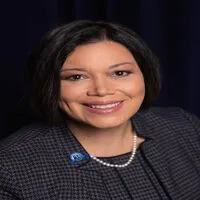
Monique Guillory is the Interim President of Dillard University. The Dillard University Board of Trustees appointed Dr. Monique Guillory, a native New Orleanian with over 30 years of executive-level experience in higher education, to serve as the university’s interim president effective July 1, 2024. Dr. Guillory joined Dillard as provost and chief academic and enrollment officer on April 1, 2024, and was serving as acting president since May of this year.
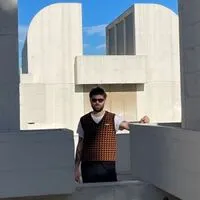
Sam Hellmann is a PhD candidate in Chinese media and cinema. He is affiliated with the Institute for Comparative Literature and Society and the Center for Comparative Media. His dissertation, tentatively titled “International Form / Socialist Content,” looks at the work of central state architects in the early years of the Chinese Revolution alongside their Soviet counterparts, turning to both design work and theoretical output to reconstruct the parameters of socialist internationalism as it materialized in the physical spaces of urban and rural China.
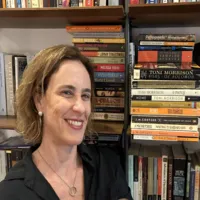
Gil Hochberg is Ransford Professor of Hebrew and Comparative Literature, and Middle East Studies at Columbia University and Chair of MESAAS. Professor Hochberg’s research focuses on the intersections among psychoanalysis, postcolonial theory, nationalism, gender and sexuality.

Humeira Iqtidar is Professor of Politics at King’s College London. Humeira's research bring together postcolonial theory, comparative political theory and Islamic thought with a focus on modern South Asia. Thematically, her research has been concerned with questions of justice and tolerance, the place of religion in contemporary political imagination, the politics of knowledge, and the legacies of colonialism. Methodologically, she has argued for greater interdisciplinary and cross disciplinary research.
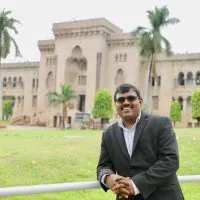
Chinnaiah Jangam is an Associate Professor in the Department of History at Carleton University. His research focus is on the social and intellectual history of Dalits in modern South Asia. His first book, Dalits and the Making of Modern India, was published by Oxford University Press in 2017.
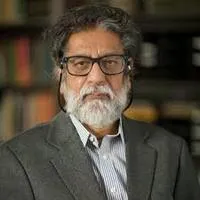
Sudipta Kaviraj is a Professor of Middle Eastern, South Asian and African Studies at Columbia University. He is a specialist in intellectual history and Indian politics, and works on two fields of intellectual history: Indian social and political thought in the nineteenth and twentieth centuries, and modern Indian literature and cultural production.
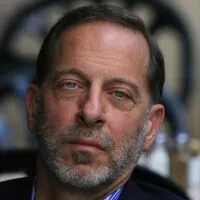
Rashid Khalidi is Edward Said Professor of Modern Arab Studies Emeritus in the Department of History at Columbia University. He was editor of the Journal of Palestine Studies, and was President of the Middle East Studies Association, and an advisor to the Palestinian delegation to the Madrid and Washington Arab-Israeli peace negotiations from October 1991 until June 1993. He is author of: The Hundred Years' War on Palestine: A History of Settler Colonialism and Resistance, 1917- 2017 (2020); Brokers of Deceit: How the U.S. has Undermined Peace in the Middle East (2013); Sowing Crisis: American Dominance and the Cold War in the Middle East (2009); and The Iron Cage: The Story of the Palestinian Struggle for Statehood (2006), among numerous other books.
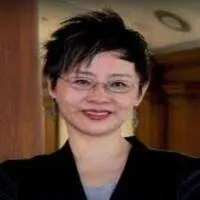
Lydia H. Liu is the Wun Tsun Tam Professor in the Humanities and former Director of the Institute for Comparative Literature and Society. Her research centers on modern China, cross-cultural exchange, and global transformation in modern history, with a focus on the movement of words, theories, and artifacts across national boundaries and on the evolution of writing, textuality, and media technology.
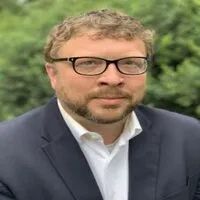
Robert Luckett is Professor of History and Director of the Margaret Walker Center and COFO Center at Jackson State University. His books include a collection of essays, Redefining Liberal Arts Education in the 21st Century (2021), and a monograph, Joe T. Patterson and the White South’s Dilemma: Evolving Resistance to Black Advancement (2015).
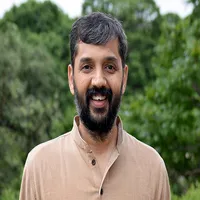
Deepak Malghan is a chemical engineer and ecological economist at the thermodynamics and scale theory interface. He is Assistant Professor at the Indian Institute of Management Bangalore. Malghan is also an activist who works on problems confronting Indian institutions, including the decline of public universities, social diversity deficits, academic freedoms, and the nexus between crony capitalism and religious fundamentalism.
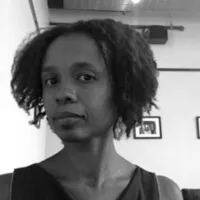
Marya McQuirter is a black studies researcher and writer based in Washington, DC. Her current book project, Technochoreographies, makes a case for the centrality of bicycles as material, social and technological objects in the late 19th century U.S. You can read a segment of the photography chapter in her most recent article, “yes. still. movement.”, published in liquid blackness. Marya has developed and collaborated on a number of DH projects, including the dc1968 project, which commemorates the 50th anniversary of DC in 1968. In 2020, she used university research funds to produce, print and freely distribute an art catalog, 1968 in deep color. Marya is also lead for Connecting Communities Digital Initiative at the Library of Congress.
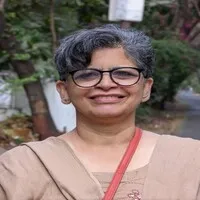
Anjali Nerlekar is Associate Professor of South Asian Literatures at Rutgers University. She has an academic career that spans India, Bahrain and the United States. Her research interests include multilingual Indian modernisms; modern Marathi literature; Indian English literature; Indo-Caribbean literature; world literatures; translation studies; Caribbean and postcolonial Studies; Indian print culture; Indian visual studies; archipelagic studies.
Kekeli Nuviadenu is Assistant Dean of the School of Performing Arts & Communication at Bethune-Cookman University. He is also Professor and Chair of the Department of Communication Studies, Theatre & Dance. His research interests include International Communication, Interpersonal Communication, Intercultural Communication, Mass Communication; Teaching and Learning in Higher Education including the Online Environment.
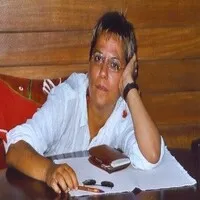
Neni Panourgiá is Affiliated Faculty at the Program in Hellenic Studies. She is an anthropologist, Associate Professor at the Prison Education Program, Psychology Department, and Academic Adviser at the Justice in Education Initiative at Columbia University.
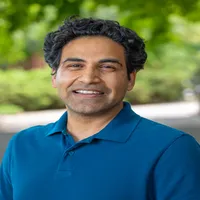
Gaurav J. Pathania is Assistant Professor of Sociology and Peacebuilding at Eastern Mennonite University. Gaurav has also been a visiting scholar at the University of Massachusetts, Amherst, and the University of Southern California. His first book, The University as a Site of Resistance: Identity and Student Politics (Oxford University Press, 2019), explores student resistance in higher education in India. Currently, his research focuses on the socio-political activism of the South Asian diaspora in the US and UK.
Arvind Rajagopal is Professor of Media Studies at NYU and is an affiliated faculty in the Departments of Sociology and Social and Cultural Analysis. His books include Politics After Television: Hindu Nationalism and the Reshaping of the Public in India (Cambridge, 2001), which won the Ananda Kentish Coomaraswamy Prize from the Association of Asian Studies and the Daniel Griffiths Prize at NYU, both in 2003, and The Indian Public Sphere: Structure and Transformation (Oxford, 2009).
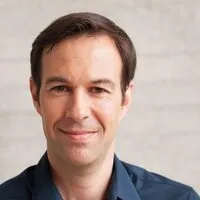
Guillaume Ratel has been managing all of the Consortium of Humanities Centers and Institutes grants and programs since joining CHCI in 2016. As Executive Director, Guillaume now oversees all of the Consortium's operations, budgets, and staff, as well as the new cycle of the Mellon-CHCI Global Humanities Institutes and Inclusive Collaboration initiative. A historian by training, Guillaume holds a Ph.D. from Cornell University, where his doctoral research focused on the role of legal practices in the emergence of state-sponsored notions of absolute truth.
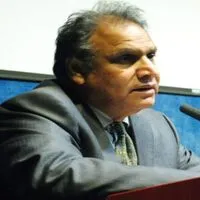
Sukhadeo Thorat is an Indian economist, educationist, professor and writer. He is the former chairman of the University Grants Commission. He is professor emeritus in Centre for the Study of Regional Development, Jawaharlal Nehru University. He is an expert on B. R. Ambedkar.
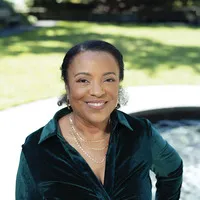
Kim Vaz-Deville is currently a Visiting Professor at Dillard University in New Orleans, Louisiana. Her work in New Orleans focuses on the lives of African Americans from the early 20th century to the present, explicitly on their material and intangible culture. Her book The “Baby Dolls”: Breaking the Race and Gender Barriers of the New Orleans Mardi Gras Tradition (LSU Press, 2013) was the 2016 selection for the One Book One New Orleans campaign for literacy and community. She was the 2023-2024 Lillian Gollay Knafel Fellow at the Harvard Radcliffe Institute. From 2011- 2024 she served various roles at Xavier University of Louisiana as Professor of Education and Associate Dean of the College of Arts and Sciences.
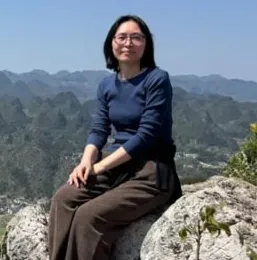
Yan Hairong is Professor at Tsinghua Institute for Advanced Study in Humanities and Social Sciences and Professor at the Department of Sociology. Studying the migration of women in China at the turn of the century in the context of rural-urban, gender, and class relations, she wrote New Masters, New Servants: Migration, Development, and Women Workers in China (Duke University Press, 2005).