Seminar Leaders
December 11, Monday | A conversation: translating modern Chinese thought
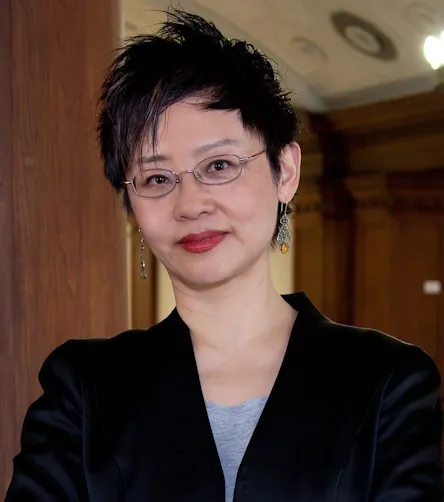
Lydia H. Liu is the Wun Tsun Tam Professor in the Humanities at Columbia University. She has published extensively on political thought, critical translation theory, Chinese and comparative literature, digital media, and the philosophy of language. Her representative books include ‘The Freudian Robot: Digital Media and the Future of the Unconscious’ (2010), ‘The Clash of Empires: The Invention of China in Modern World Making’ (2004), ‘The Birth of Chinese Feminism: Essential Texts in Transnational Theory’ (co-edited, 2013), ‘Tokens of Exchange: The Problem of Translation in Global Circulations’ (edited, 1999), and ‘Translingual Practice: Literature, National Culture and Translated Modernity-China 1900-1937’ (1995). Her newest book is called ‘Global Language Justice’ co-edited with Anupama Rao and Charlotte Silverman and published by Columbia University Press in November 2023.
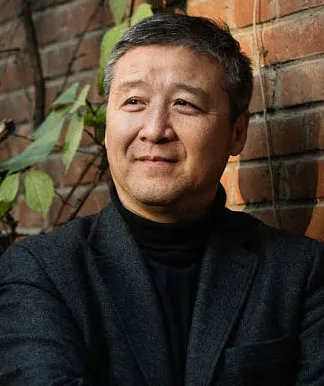
Wang Hui is the founding Director of the Tsinghua Institute for Advanced Study in Humanities and Social Sciences (TIAS). He teaches at Tsinghua University as Distinguished Professor of Literature and History. Wang Hui graduated with a PhD degree in Chinese literature from the Chinese Academy of Social Sciences in 1988. He worked at CASS from 1988-2002. In 1996-2007, he served as the chief editor of ‘Dushu Magazine’, the most influential intellectual journal in China. In 2002, he moved from CASS to Tsinghua University. His books have been translated into English, Italian, Spanish, German. Japanese, Korean, Slovenian, Portuguese, Turkish, etc. The English language translations include ‘The Rise of Modern Chinese Thought’ (2023), ‘China's Twentieth Century’ (2015), ‘China From Empire to Nation-State’ (2014), ‘The Politics of Imagining Asia’ (2010), ‘The End of Revolution’ (2009) and ‘China's New Order’ (2003). Wang Hui is the recipient of many awards such as the 2013 Luca Pacioli Prize which he shared with Jürgen Habermas in Italy, and the Anneliese Maier Research Award (2018) in Germany.
December 15, Friday | Caste and the Urban Sensorium in Bombay Cinema
This presentation looked at the relationship between caste and cinema through a focus on three films located in the everyday textures of urban life. Neeraj Ghaywan's Masaan is based in Banaras, while Chaitanya Tamhane's Court and Pa. Ranjith's Kaala are set in Bombay. Court is a judicial drama that reflects on the suicide of a sewage worker. Kaala is a film about a Dharavi resident who decides to take on a major real estate tycoon. Masaan explores the lives of a Dalit man from the Dom community and an educated Brahmin girl, both of whom strive for a better life. The narrative accounts of lived experiences were analyzed through the prism of cinematic cartography, production design, and architectural visions.The seminar leader showed how cinema's inherent approach to 'mapping' is creatively negotiated to build a new spatial language for the articulation of caste concerns.
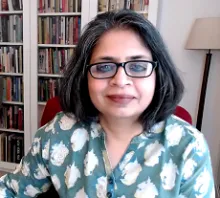
Ranjani Mazumdar is a Professor of Cinema Studies at Jawaharlal Nehru University, Delhi. Her publications focus on urban cultures, popular cinema, gender, and the cinematic city. She is the author of ‘Bombay Cinema: An Archive of the City’ (2007) and co-editor with Neepa Majumdar of ‘A Companion to Indian Cinema’ (2022). Her current research focuses on globalization and film culture, intermedial encounters, and the intersection of technology, travel, design, and color in 1960s Bombay Cinema.
December 18, Monday | Violence of Democracy
Drawing on her recent book, ‘Violence of Democracy: Interparty Conflict in South India’,in this presentation, Ruchi Chaturvedi situated interparty violence in Kerala in the local, national, and global history of representative democracy. She posits aggressive competition as a modality central to the life of many democracies in the postcolonial and Euro-American worlds. Such competition has frequently fostered majoritarian violence, religious and ethnic conflagrations, racial supremacism, and xenophobia. At the same time, political groups who perpetuate this violence have won impressive electoral victories. Against this backdrop, Chaturvedi juxtaposed ethnographic insights on political violence in North Kerala with historically informed critiques of representative democracy that both scholars of the global south and north have offered. Drawing on her research and these critiques, Chaturvedi unpacked how postcolonial democracies have cultivated and rewarded a politics of similitude and violent hegemonic masculinities. Other topics she analyzed are the paradigms of responsibility, which undergird the modern criminal justice system, and that have further facilitated exclusionary politics in India and elsewhere. The task of obtaining more equal, just, and less violent democracies, she suggests, is premised on such an interrogation.
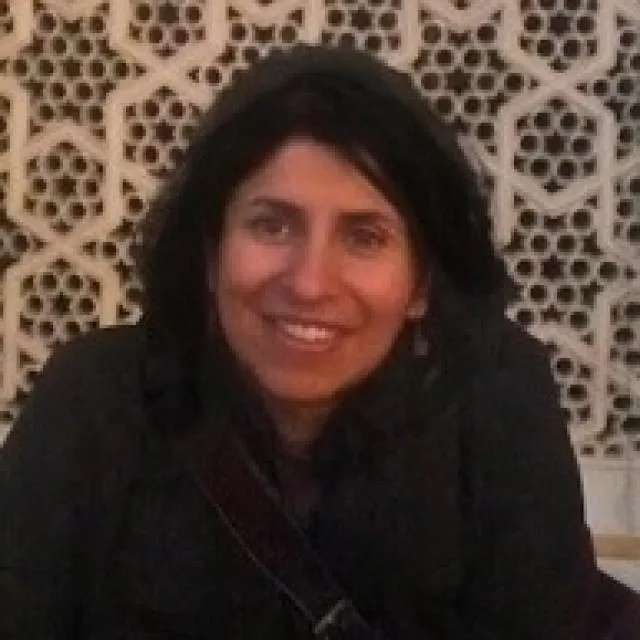
Ruchi Chaturvedi is an Associate Professor at the Department of Sociology, University of Cape Town, South Africa. Her research focuses on cultures of democracy, popular politics and political violence in South Asia and South Africa. She is the author of ‘Violence of Democracy: Interparty Conflict in South India’ (Duke University Press, Orient Blackswan, 2023) and co-editor of ‘Epistemic Justice and the Postcolonial University’ (Wits University Press, 2023).
December 19, Tuesday | Archives of the Minor: A Panel Discussion
How do new kinds of archiving and curatorial practices help to bring back minor and subaltern voices into reckoning? How has archiving changed in the digital age where cyberspace functions as a site of accumulation, curation and indeed loss? Is the archive a place or a path? Can the subjects of archiving be archivists themselves?
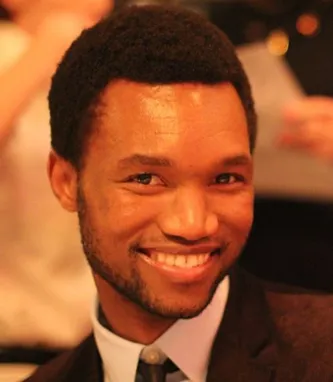
Kewpie, Daughter of District Six - archiving gender dissidence
Lwando Scott is a Next Generation Scholar at the Centre for Humanities Research (CHR) at the University of the Western Cape. Lwando's research focus is on what he loosely terms "queering the postcolony" and thus incorporates, engages, challenges, and stretches concepts such as decolonisation, sexuality (queerness), gender, culture, and futurities within the post-colonial South African context. His work is a continuation of Queer African Studies that interrogates narrow definitions of "Africanness" definitions that seek to position African queer people as existing outside "Africanness" as such.
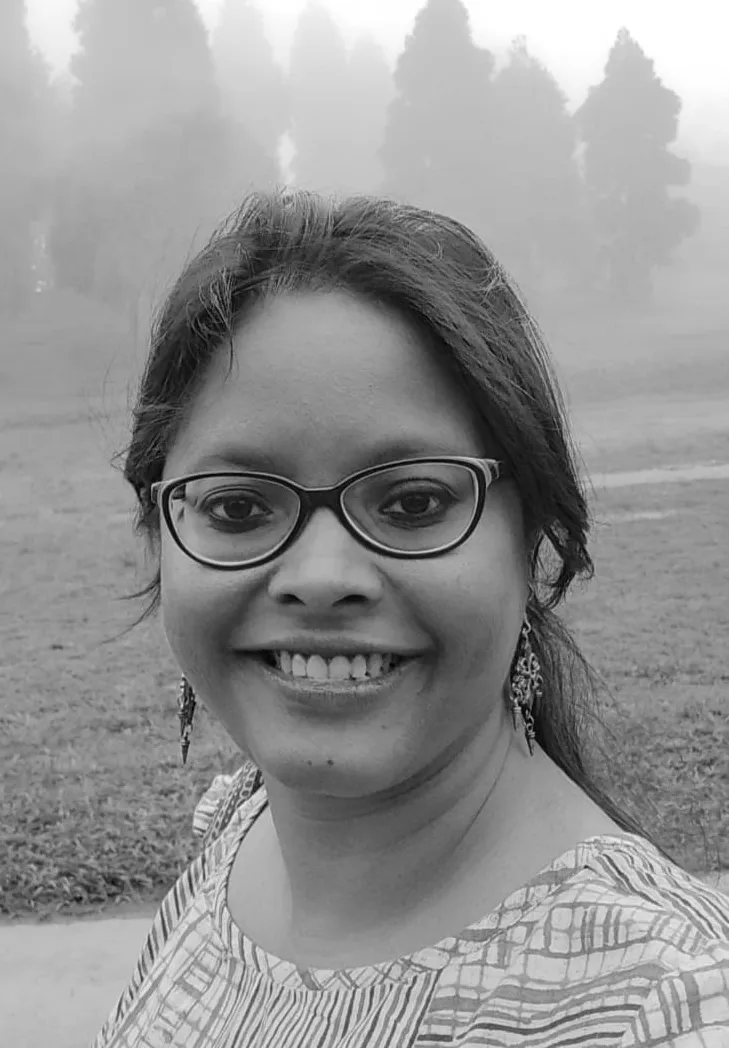
Endangered Archives - Early Santali Periodicals of Eastern India
Rahi Soren is an Assistant Professor at the School of Oceanographic Studies, Jadavpur University. She is interested in understanding the effective use of scientific information for conserving culture, habitat and biodiversity in the face of the growing threats of extinction. Her projects include Mapping Traditional Santali Songs (funded by RUSA 2.0) as well as Locating and Digitizing early Santali periodicals (funded by Endangered Archives Programme, British Library).
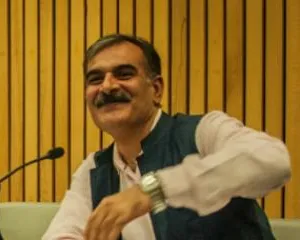
Intermedia and Multiple Language Archives
Ravikant is a bilingual inter-media historian, writer and translator, and the editor of the journal Pratiman. His latest publication is ‘Hinglish Live: Language-mixing Across Media’ (Orient BlackSwan, 2022; with Francesca Orsini).
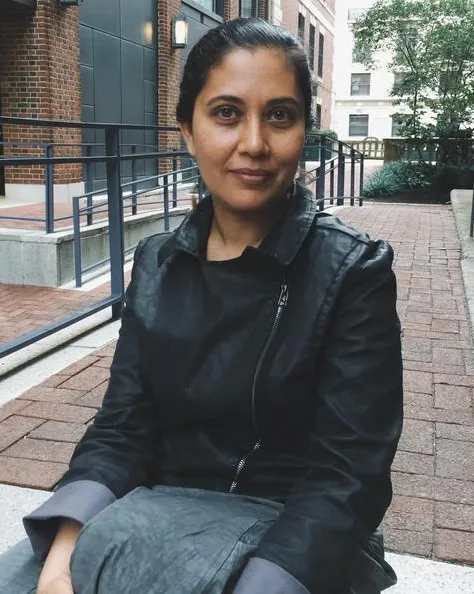
Moderator
Anupama Rao is a Professor of History (Barnard) and MESAAS (Columbia). She is the Director of the Institute for Comparative Literature and Society at Columbia University, and long time Senior Editor of Comparative Studies in South Asia, Africa, and the Middle East. She is completing a monograph titled ‘Ambedkar in America’, and editing the forthcoming volume, the Cambridge Companion to Ambedkar. She directs the Ambedkar Initiative, which aims to locate Ambedkar in his global and specifically Anglo- American context through engaged pedagogy and public outreach.
December 20, Wednesday | The More-Than-Human City in Cinema
This presentation examined the nonhuman ensemble of lives in urban spaces, and the ways in which cinema has imagined it. Looking outside the catastrophist film narratives that routinely configure popular ecotopias or eco dystopias, the presentation looked at how nonfiction cinema marshals its indexical charge to foreground questions of relationality,and multispecies entanglement. Drawing out of the seminar leader’s own practice in making All That Breathes (2022), he speculated on how cinema's geomorphic tendencies get increasingly negotiated in the contemporary creative documentary. How does nonfiction take on a renewed valence today in contemplating the 'more-than-human' density of the world?
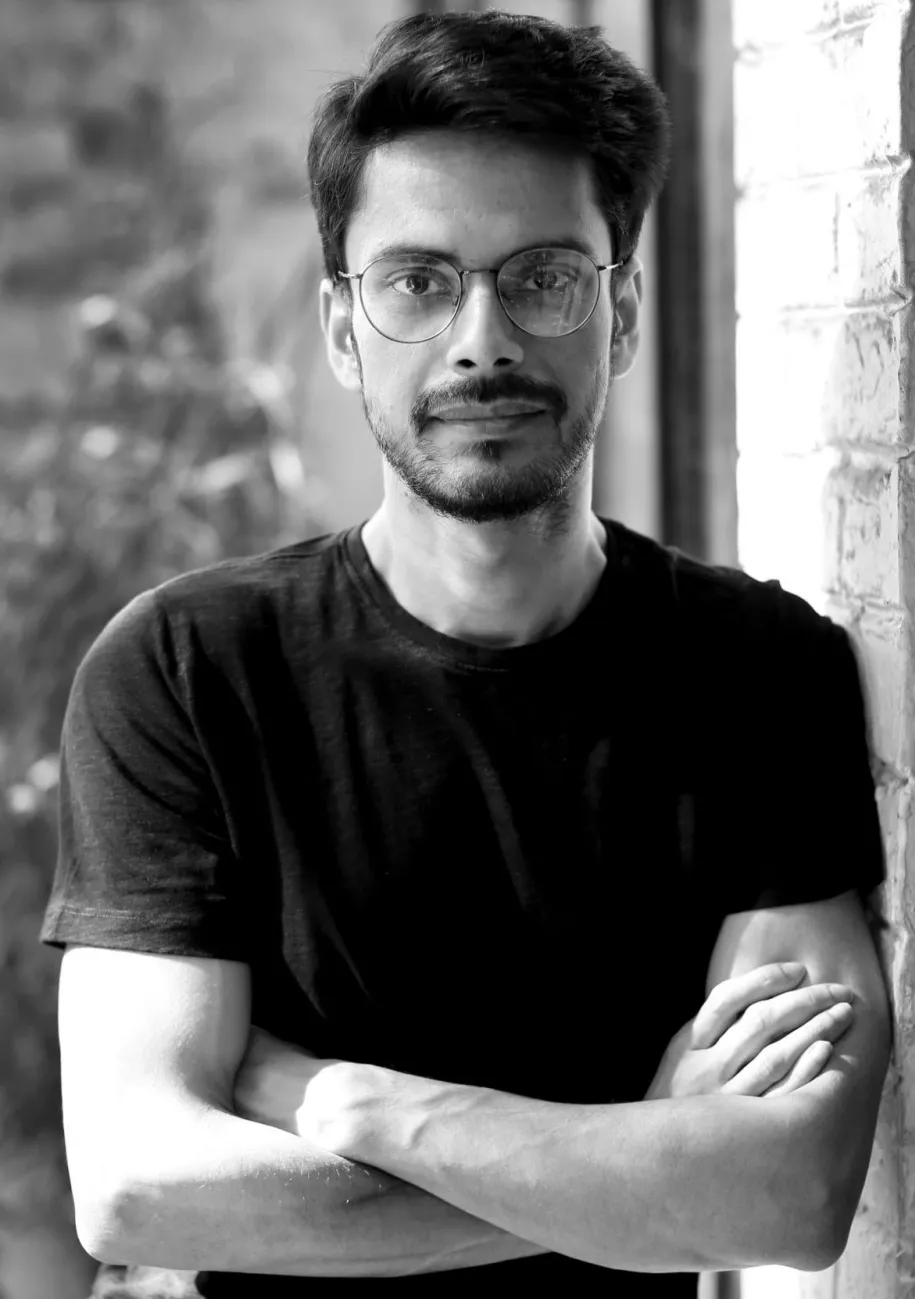
Shaunak Sen is an Academy award nominated filmmaker and writer based between Delhi and Berlin. His film All That Breathes, received nominations at the 2023 Academy and BAFTA awards. The film won the Golden Eye at Cannes Film Festival 2022, the Grand Jury Prize at Sundance Film Festival, and awards at the Griersons, The Gotham Award, BFI London, American Society of Cinematographers, IDA, Cinema Eye and 24 other film festivals. Cities of Sleep (2016), his first feature-length documentary, was shown at various major international film festivals and won 6 international awards. Shaunak holds a PhD and has published in journals including Bioscope and Widescreen. He was invited to be a member of the Academy of Motion Pictures in 2023.
December 21, Thursday | Ambedkar: The Memory of Enmity
In his ‘Pakistan or the Partition of India’ (1945), Ambedkar approvingly cites Ernest Renan's proposition about the necessity of forgetfulness for building national unity. Since both Hindus and Muslims cling to memories of past hostilities and war, such unity, Ambedkar suggests, might be difficult to achieve in India. But while in this case Ambedkar seems to argue for the necessity of historical forgetting, in his astonishing 1947 text on the Shudras, he makes a painstaking and passionate case for precisely an un-forgetting for excavating an ancient history of war and hostility that has been covered over by a calcified, opaque and apparently indestructible system of oppression. This presentation exhibited a preliminary attempt to think about the relation between memory and war in Ambedkar's work by reading his work together with that of Nicole Loraux, who, at the conclusion of her monumental book on stasis, memory, and forgetting
in ancient Athens (1997), turns to the 1940s and makes a plea for what she calls the "slow work of mourning involving not facile commemoration or distancing, but the incorporation of a conflictual past. Such incorporation seems almost impossible today, when, confronted with a brazen genocidal massacre in Palestine, not only governments but also educational institutions in most parts of the world seem intent on a forgetting of all historical context, an erasure of the political, and a forceful fortification of ideological binaries generated to serve colonial capital. What can a slow, wakeful return to Ambedkar's and Loraux's work bring today to our attention? How should we read Ambedkar's texts on early India? The seminar leader’s hypothesis is that these texts become most productive and potent when they are read, not simply as possible accounts of empirical history, but instead as inventive and powerful "myths" that allow us to make sense of something intractable in the present; that enable us to see how, in the words of the psychoanalytic thinker Joan Čopjec, “every phenomenal field occludes its cause.“
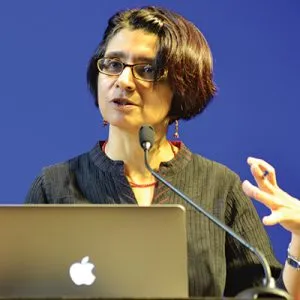
Simona Sawhney teaches in the Department of Humanities and Social Sciences at the Indian Institute of Technology, Delhi. Her research and teaching interests include Indian literature, modern political thought, and feminist thought. She is the author of ‘The Modernity of Sanskrit’ (University of Minnesota Press, 2008) and has been a senior co-editor of the journal ‘Cultural Critique’ (University of Minnesota Press) for about a decade.