Image Carousel with 4 slides
A carousel is a rotating set of images. Use the previous and next buttons to change the displayed slide
-
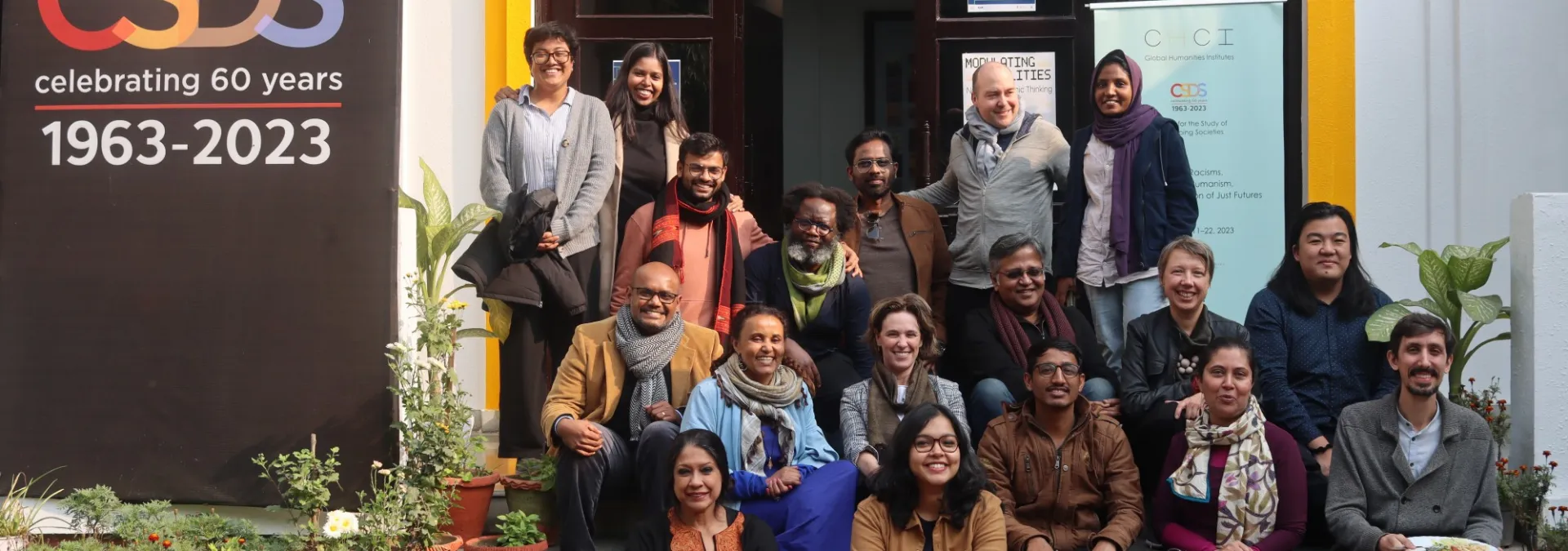
Slide 1: Pictures from the conference, December 2023
-
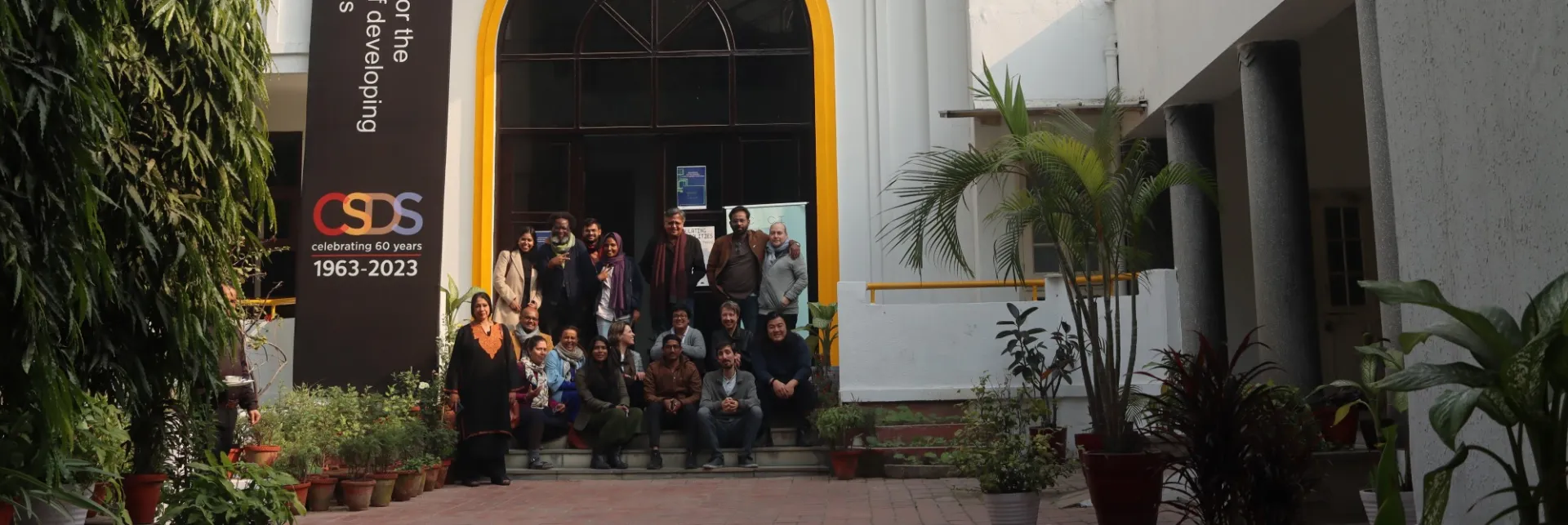
Slide 2: Pictures from the conference, December 2023
-
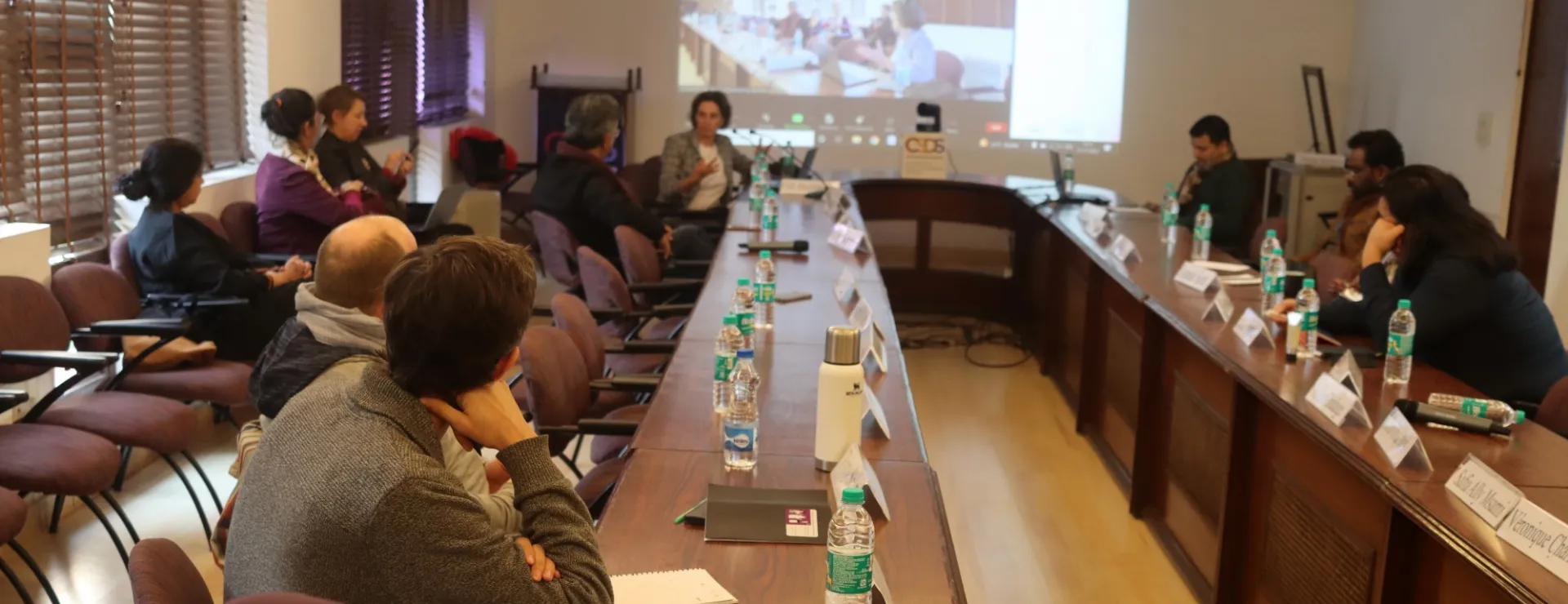
Slide 3: Pictures from the conference, December 2023
-
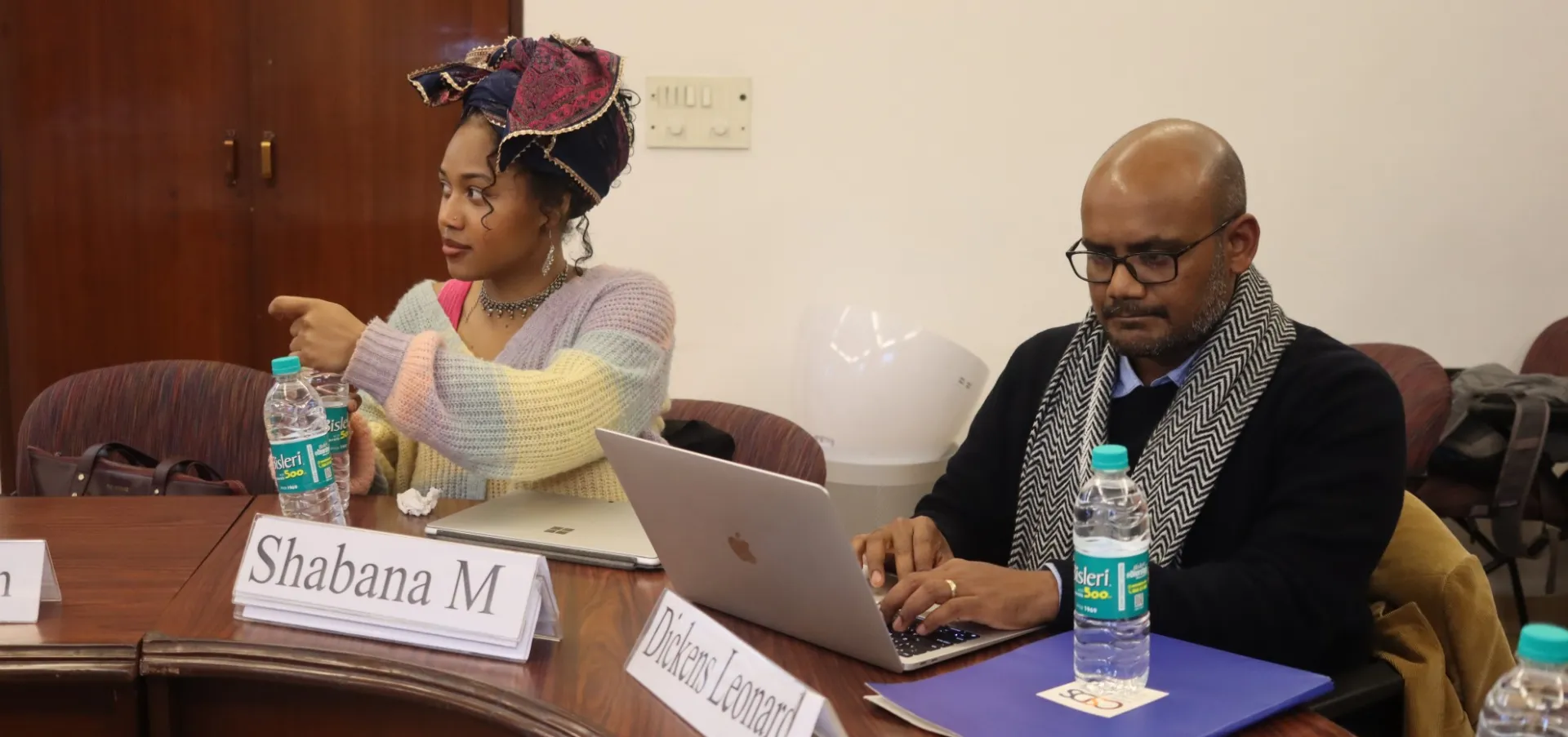
Slide 4: Pictures from the conference, December 2023
About the Global Racisms Institute and the Conference
Global Racisms is a Global Humanities Institute (GHI) supported by the Consortium of Humanities Centers and Institutes (CHCI) and funded by the Andrew W. Mellon Foundation. CHCI works to advance multiple forms of international, collaborative research, designed to foster new knowledge and new networks; its members include humanities centers at colleges and universities, independent scholarly societies, research libraries, and other institutes of advanced study. CHCI launched the first Global Humanities Institute in 2017.
Our CHCI / Mellon Global Humanities Institute, Global Racisms, Cold War Humanism, and the Imagination of Just Futures, is a partnership involving four universities: Institute for Comparative Literature and Society at Columbia University in the City of New York (USA); the Centre for Humanities Research at the University of the Western Cape (South Africa); Centre for the Study of Developing Societies (Delhi), and Tsinghua Institute of Advanced Study, Tsinghua University (Beijing).
The overarching goal of this Global Humanities Institute is to draw on the strong transnational resonance of the Black Lives Matter movement and the compelling responses of global communities, across distinct demographics and colonial histories, to reflect more broadly on the global reach and relevance of humanistic scholarship on the study of subaltern pasts. It draws on the current conjuncture to develop critical studies of race and racism that extend beyond the historical experience of the North Atlantic, and North America in particular. Its focus on philosophies of difference link scholarships that tend to privilege the racial politics of post-emancipation societies of the New World, with concerns with postcolonial sovereignty and the politics of culture in the aftermath of European imperialism across “Asia” and “Africa”. To do so, the institute adopts 'Cold War humanism' as a mode of historicization, alert to the constitutive contradiction between race/racism and ideas of “the human” as the organizing rubric of modern global thought and imperial governance. The inquiry is organized on three thought strands: Thought Worlds, with a focus on the relationship between world-making and concept-formation; Redress and Reparations, which asks how states and communities have approached the problem of righting (historic) wrongs; and attention to questions of Aesthetics and Politics, as these enable projects of public activism and engagement by focusing on the poetic, the experimental, and the fragmentary as generative sites of insurgent thought, essential to remaking everyday life. Early career scholars whose research fits into one or more of the aforementioned themes are invited to submit applications for the conference that is held annually.
The Conference has an interdisciplinary group of participants who develop and share their research, concerning how ideas of universalism and social justice might be imagined against the backdrop of imperial and post-imperial pasts; while also considering questions about the ethics and politics of the archive in relation to projects of historical redress and reparation; and also explore utopian and imaginative visions of sociability and radical care as a way to think past ongoing structures of dehumanization.
Original principal investigators of the Conference
- Lead Institution and Overall Principal Investigator: Columbia University, Institute for Comparative Literature and Society (Anupama Rao, Director; Associate Professor, History and MESAAS; [email protected])
- Co-Principal Investigators:
- Center for the Study of Developing Societies (New Delhi): Prathama Banerjee (Professor, History and Political Theory), Baidik Bhattacharya (Associate Professor, English Literature)
- Tsinghua Institute for Advanced Study in the Humanities (Beijing): Wang Hui (Professor, Department of Chinese Language and Literature; Director, TIAS), Yan Hairong (Hong Kong Polytechnic University; Affiliate Faculty, TIAS.)
- University of the Western Cape, Centre for Humanities Research (Capetown): Heidi Grunebaum (Associate Professor and Director, CHR), Premesh Lalu (Professor, History and outgoing Director, CHR), Suren Pillay (Associate Professor, Anthropology, CHR)