Image Carousel with 4 slides
A carousel is a rotating set of images. Use the previous and next buttons to change the displayed slide
-
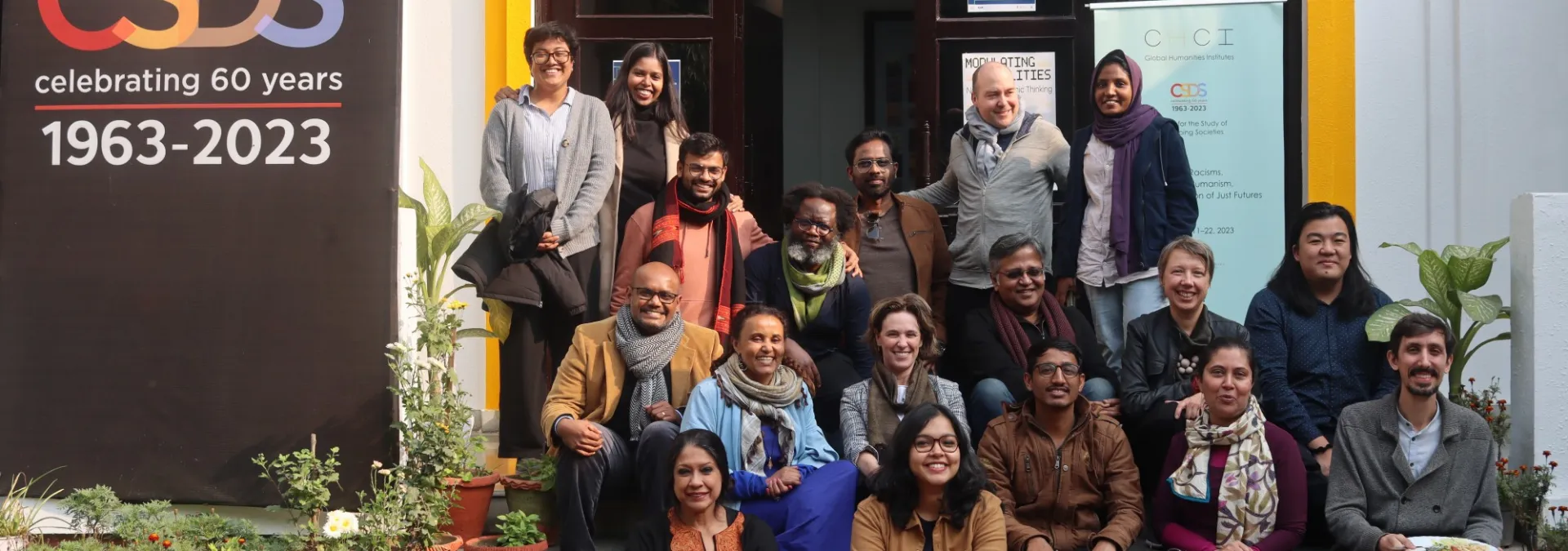
Slide 1: Pictures from the conference, December 2023
-
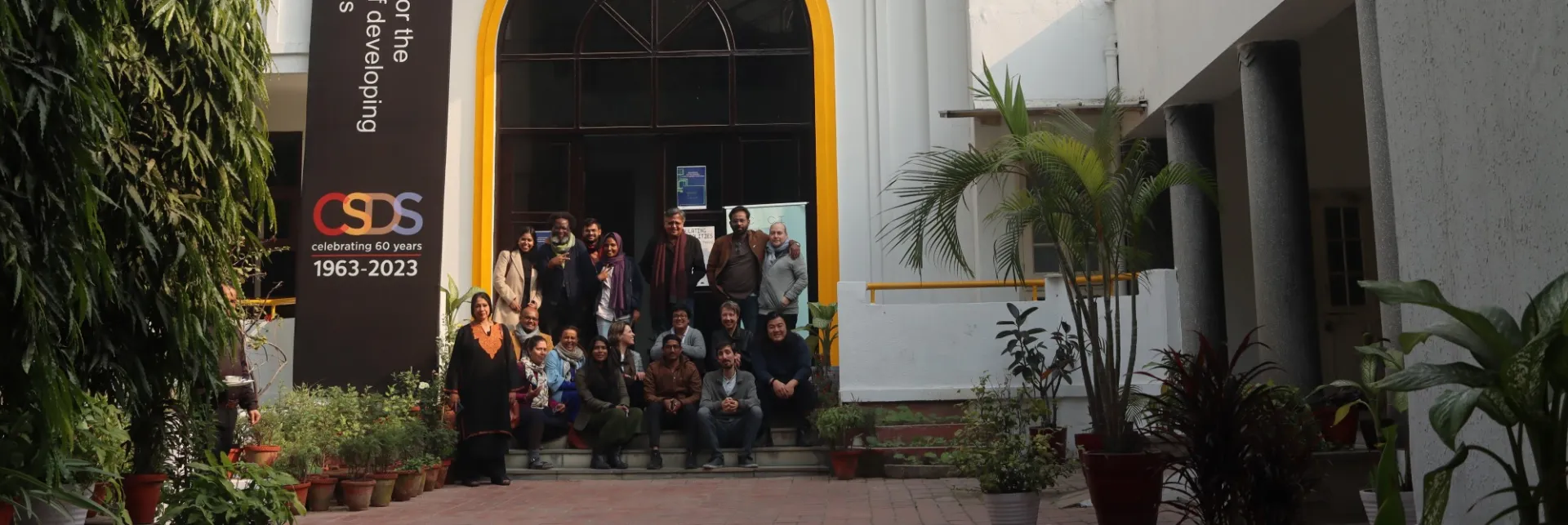
Slide 2: Pictures from the conference, December 2023
-
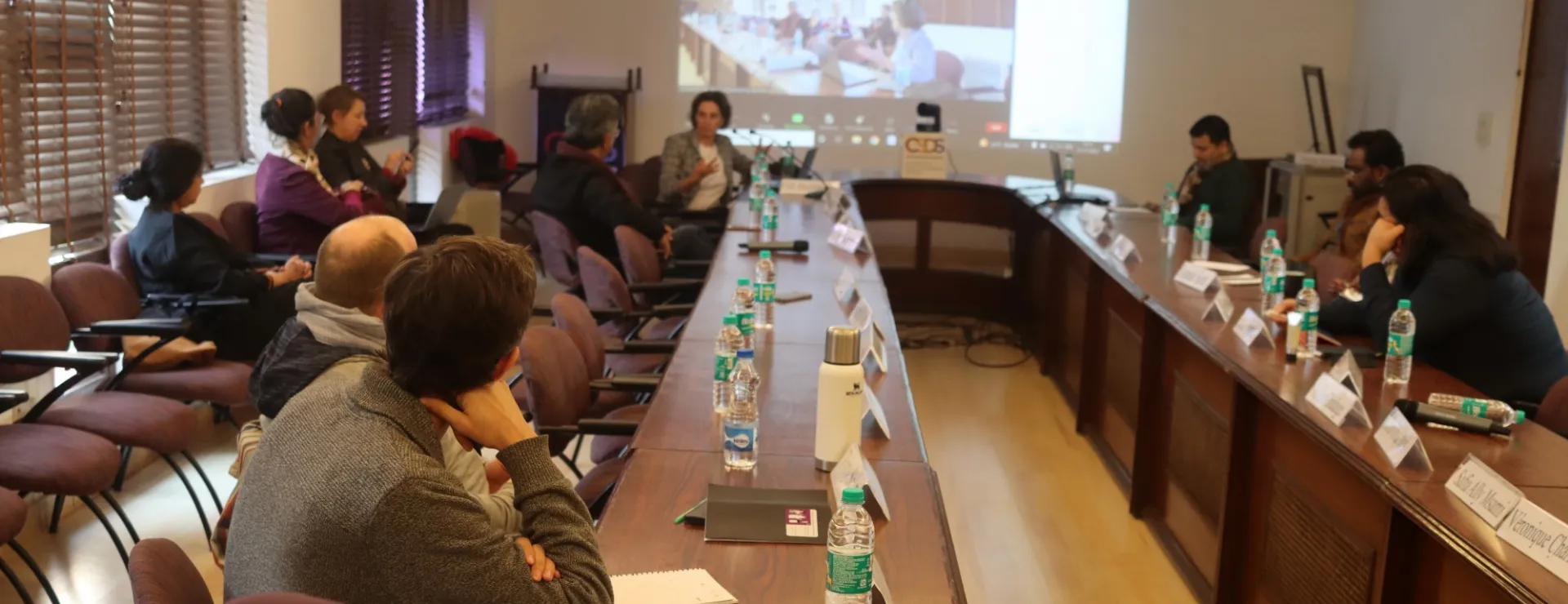
Slide 3: Pictures from the conference, December 2023
-
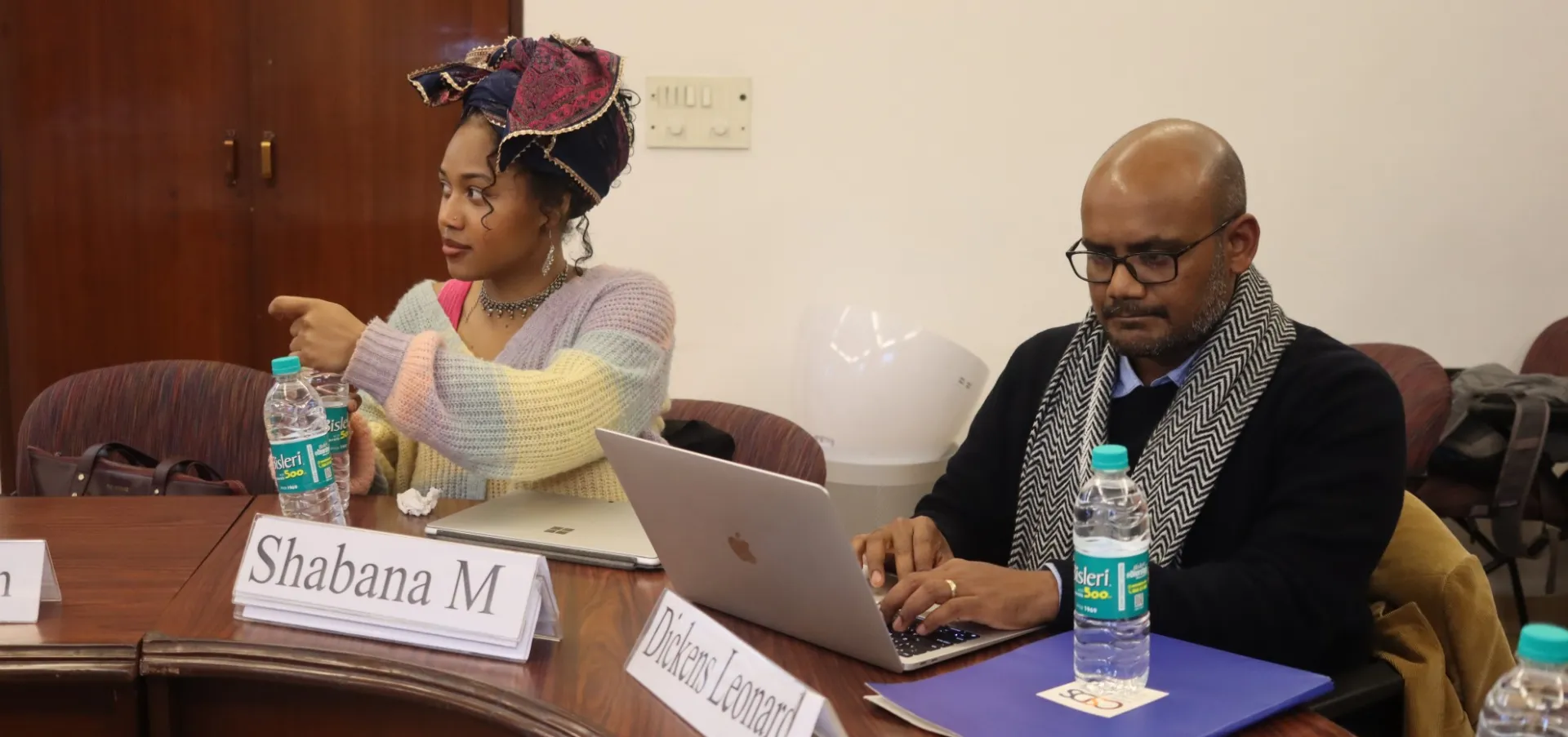
Slide 4: Pictures from the conference, December 2023
2023 Conference Report
The CHCI Global Humanities Institute (GHI) meeting was held between 11th and 22nd December 2023 at the Centre for the Study of Developing Societies (CSDS), Delhi. The theme for the conference was Global Racisms, Cold War Humanism and Just Futures. It was attended by faculty from CSDS, Jawaharlal Nehru University (Delhi), Columbia University, New York University, Concordia University, University of Western Cape, University of Cape Town, Addis Ababa University, University of California, Irvine, and Tsinghua University, who held discussions as seminar leaders. The emerging scholars who participated in the conference were from India, US, UK, Canada, and Africa. With twelve seminar leaders, twenty-eight emerging scholars and fifteen faculty persons from CSDS and other institutions and universities in Delhi, it was a packed event. Despite the team's best efforts, participants from Pakistan and China were unable to attend the conference due to the geopolitical tensions at the time. Latin Americanists too were unable to attend the conference although the connected histories of Portuguese and Spanish colonialisms in Asia and the Americas were discussed during the conference. Most participants attended the conference in-person even as hybrid sessions were made available upon request.
The conference was organized around themes of global racisms and the seminar leaders lectures and closely read the pre-circulated texts during the sessions. Talks and panel discussions were organized for most of the evenings, and the topics included media and cinema. There was a special emphasis in the discussion on alternative archives as part of the project of just futurity. CSDS also had a parallel workshop on 14th and 15th December on urban soundscapes and liquid architectures. The participants attended those workshops as well and enjoyed a history walk in south Delhi over the weekend, led by a specialist on Delhi’s history. The experience for all the participants was thus, wholesome and enriching.
One of the key takeaways of the conference was the discussion of how the concept of race functioned as a global index of inequality. Caste, tribe and indigeneity were discussed in similar terms, to examine how these forms of inequality had operative ways that are observed in racial inequality. The idea that race was becoming a universal meta-category (as class once was), subsuming other histories of hierarchy and exploitation was discussed greatly. The role played by global history of modern colonialism in influencing how race thinking spread across the world, and brought categories like caste to also be explored in similar terms, was explored in great detail. The 'nationalization' of forms of inequality that were originally global, through colonial modes of knowledge and governance, was an important conversation during the conference. A recovery of the said global histories was deemed necessary, even as gender and sexuality were observed to be a commonality for different forms of inequalities around the world.
The conference also attended to exploring how the experience of the Cold War differed across various regions and shaped different histories. The idea that the Cold War was actually ‘hot’ in parts of Asia and Africa, was an interesting point brought forth by the participants. The idea that humanist values and internationalist ethics looked the same from different geopolitical perspectives, was debated and differing opinions allowed for a meaningful engagement with the theme. The imagination of ‘just futures’ at a global and/or planetary scale, began at the conference with such ideas, thoughts, and engaging discussions.
The diversity of disciplines that the conference explored allowed for all participants to see the differences in the social and political purchases of disciplines across the globe. The observation that the same disciplines had evolved differently in different regional institutions encouraged discussions on the ideas of inequalities and differential histories. At the centre of the discussion lay the history of different colonialisms in different parts of the world (so the structure of French colonialism was very different from the British, settler colonialism was different from mercantile colonialism and so on) and the consequent ways in which the project of the decolonization of knowledge and politics looked different to different participants. A passionate discussion on these inequalities also allowed the emerging scholars to bring the attention of all participants to the need for discussing the problems of academic hierarchies. Speaking of global inequalities, they opined, must involve not just a deconstruction of the politics of knowledge but also a critique of the politics of academia as a professional field. Important discussions about the question of adequate representation of all identities at the table and outside the conference proved to be particularly enlightening. The role of experience as the primary touchstone (or not) of knowledge production was discussed in great detail as a matter of current debates and the discussions proved useful as they encouraged the participants to learn and understanding the complexity of the politics of identities while also pushing them to introspect on how equality can be achieved in this sphere.
The conference was the start of many friendships that were formed over long lunches exploring different cuisines, and long walks where everyone discovered the cities of Agra and Delhi together. Blending the formal space of academic discussions, seminars and debates, with the informal space of congeniality, open conversations, and learning about one another's cultures and histories, made the imagination of 'just futures' a possible shared dream for all the participants in the conference.